Chris Kalgren

Better Outcomes
- End to End

I design the org, engineer the processes, and build the AI for the world’s most demanding operations.

Let’s work Scroll ↓
Chris Kalgren
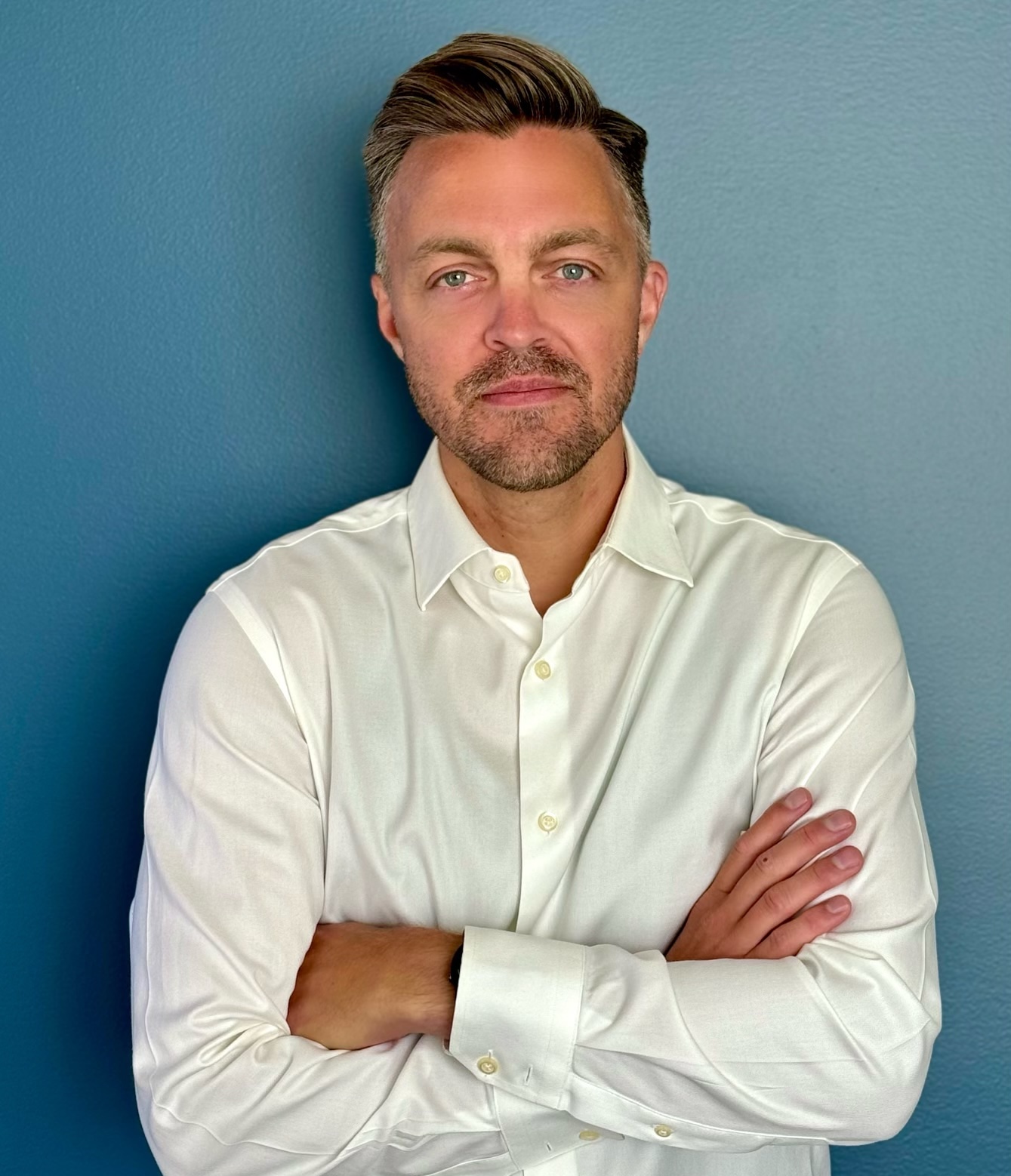
Portrait: CK headshot

Trusted by the operations you know

Walgreens
Target
Starbucks
Seagate
Medtronic
Casey’s
HMSHost
…and many more
I

The Approach

Most operations don’t break for lack of effort.

They break because the organization, the engineered processes and the applied technology are treated as three separate problems, run by three teams pulling in three directions. I’ve spent more than two decades solving them as one: assessing the organization, designing the processes, re-architecting the technology, and aligning the job functions that have to make it real. One system, pulling in the same direction.

Three problems. One system. Better Outcomes - End to End

II

What I Do

Three focuses. One system.

01

Organization & Talent

The right structure, roles, and capability, plus coaching and the 360 leadership development my father pioneered and I carry forward. Now also an instrument: Kinetry, the team behavior platform I built to measure and coach the 24 behaviors that drive performance.

02

Engineered Labor & Workforce Modeling

Engineered standards, statistical sampling, labor models, staffing models, and workload planning that actually drive the result.

03

AI & Workforce Technology

Strategy, tech-stack design, vendor selection, and AI / Automation, so your technology finally pulls its weight.

Delivered however it fits: advisory, hands-on build, workshops, or one-on-one.

III

About

Every seat.
Every function.

“There’s no limit to the amount of creativity he can offer.”

Most operations don’t break for lack of effort. They break because the organization, the engineered processes and the applied technology are treated as three separate problems, run by three teams pulling in three directions. I’ve built my career solving them as one.

For more than two decades, I’ve approached a single question from every possible angle: how do you make a large, complex operation genuinely work better? I’ve answered it as the industrial engineer who built the labor standards, the consultant who designed the labor and staffing models, the operations director who owned the result, and the software executive who shaped the technology itself. Few people in workforce management have occupied every one of those seats. I have, and it lets me see the whole system rather than any single slice of it. The proof is in operations you know: labor standards, the labor model, and workforce management for Target; labor and capacity models at Seagate; and transformations spanning Walgreens, Starbucks, Casey’s, Medtronic, and more.

My range has an unlikely source. Before the Fortune 500 work, I was a singer-songwriter and producer who fronted the band This World Fair and placed a song in the film Disturbia. Songwriting taught me to find the signal in the noise, to edit without mercy, and to move a room. Those are the same instincts I now bring to organizational and workforce management. It’s why nearly everyone I work with reaches for the same word: creative.

I also grew up inside this craft. My father, Frank, pioneered 360-degree leadership development and built Kalgren Consulting before me. I carry that people-first philosophy forward, and sharpen it with an engineer’s rigor.

That legacy now has a product. In 2026 I built Kinetry, a team behavior instrument that measures the 24 behaviors driving team performance, monthly and per person, then shows what changed after the coaching people kept. The 360 my father pioneered, carried into software: measurement you can trust, coaching grounded in evidence, results you can show a board.

The result is rare: the precision to engineer a labor standard down to the second, the range to re-architect the technology around it, and the humanity to lead the people who will live with it.

Three separate problems, solved as one. Better Outcomes - End to End
IV

Proof

The End-to-End Reset

Most operations don’t break for lack of effort. They break at the seams, where the organization, the processes, and the technology meet. Each component is optimized independently because it operates independently. The End-to-End Reset is the method I’ve refined over twenty years of this work: a single accountable person who oversees all three components as a unified system, ensuring seamless and holistic systems from the initial interviews to software execution.

I

Design the org

Every reset begins with a comprehensive 360-degree capability assessment. I interview people across every function that touches the work: operations, HR, finance, product, and technology. I map the skills, the gaps, and the missing disciplines against industry benchmarks of what the operation actually needs. Then comes the design work: structure, roles, and leaders each with the capabilities the team needs to implement the systems effectively.

I include development planning for the people who will live with the result - a craft my father pioneered, and I carry forward. I incorporate a monthly instrument called Kinetry, which I developed to measure team behavior, into this process.

II

Engineer the processes

This phase begins the same way the org work does: with an honest assessment. I audit the existing standards, labor model, and planning workflows to separate what was engineered from what was inherited - the tribal knowledge, the patchwork spreadsheets, the rules nobody can explain anymore. Then I rebuild in sequence. Labor standards come first, built from observation and statistical sampling and precise to the second. The labor model follows as one connected system rather than a collection of workarounds. Staffing, scheduling, and workload planning complete the chain, so every schedule traces back to measured work. I document each piece so your team can maintain it without me.

III

Build the AI

I sequence technology last because a stack chosen before the org and the processes are right just automates the dysfunction. The method in this phase is about protecting your decision. I benchmark your current stack against peer operations, so we know whether the problem is the tools or the way they were implemented. I write requirements from the engineered processes, not from feature lists, across labor, scheduling, reporting, and the field. I evaluate vendors having sat on their side of the table, so I know which promises hold up after the contract is signed. And I stay through implementation from the executive seat, because selection is maybe a fifth of the outcome. AI gets applied where it earns its keep. When nothing on the market did what teams needed, I built it myself: that is where Kinetry came from.

Four ways to work together

Start here · 2–4 weeks

The Operations Teardown. A compressed diagnostic of your org, processes, and tech stack. You keep the findings and a roadmap you can run with anyone, including without me.

Ongoing

Fractional advisory. Standing counsel through your reset. A few days a month, with every workstream in view.

Full scale

The full Reset. All three workstreams, end to end. I take these one at a time, so each client gets my full attention.

People-side

Workshops & 360 leadership. The leadership development craft I grew up in, paired with monthly Kinetry cycles.

Representative results
30–50%
lower annual turnover
1–5%
lower labor spend
5–10%
higher unit productivity
5–10%
better in-stock
1–5%
comp-sales lift

This method was built at real scale: labor standards, labor models, scheduling, staffing, and workload planning for Target across 1,800 stores. Labor and capacity models at Seagate. A workforce management implementation at Casey’s. Transformations at Walgreens, Starbucks, Medtronic, and HMSHost.

The most knowledgeable person in the country about labor.

SVP & Chief Retail Officer · National Food Distributor

I had the privilege of having Chris on my team as we completed the build of labor standards for 1,800 Target stores… a natural leader who influences without authority and coaches his peers.

HR Leader · Target Labor-Standards Program

One of the most organized people I’ve ever worked with. There’s no limit to the amount of creativity he can offer.

VP of Growth · Leading Mobile Gaming Provider
V

The Instrument

Applied AI isn’t a slide in my deck.
It’s a product I shipped.

KINETRY The team behavior instrument

My father pioneered 360-degree leadership development. I rebuilt that craft as an instrument.

Kinetry measures the 24 behaviors that drive team performance: every month, for every named person, not an anonymous average. Its AI coaches every gap with evidence drawn from the scores themselves. And it does what no engagement survey can: it shows what changed after the coaching people kept.

It’s the same philosophy that runs through everything here: measure precisely, coach humanely, prove the result. And it’s built to hold whether I’m in the room or not.

Explore Kinetry → Start free. First scores in minutes.

The work moves the numbers. Kinetry coaches them higher.

Let’s work

Tell me what’s not working.

I’ll tell you how we fix it.

The first conversation is a 30-minute working call. You’ll leave with one concrete idea and no pitch. And it’s just me: the person you meet is the person who does the work.

Tell me what’s breaking across any of the three: Organization & Talent, Engineered Labor & Workforce Modeling, or AI & Workforce Technology. A few lines is plenty.